Conference Center
+254 722 209 606
info@btlkenya.org
8AM - 4.30PM
BTL  East Africa
  • Home
  • About Us
    • Who We Are
    • BTL Leadership
    • Our History
    • Careers
  • Our Work
    • Bible Translation
    • Literacy
    • Mother Tongue Education
    • Publications
      • Alphabet Charts
      • Autographics
  • Get Involved
    • Support our ministry
    • BTL Language Services
    • Tafsiri Printing Press
    • Become an associate member
  • CICC
  • RUN
  • Media
    • Blog
    • Call of Kenya
  • Contact Us
  • Home
  • Portfolio

Portfolio

Ogiek-Project-scaled-1-1024x683.jpg

Ogiek Bible translation

According to the 2009 Government Census Report, their population is 78,691. Okiek people have lineages, clans and social groups which are their main socio-political units. They are also governed by age-set systems which one becomes a member of depending on the time of circumcision. It is important to note that though women are also circumcised, they do not have a separate age-set system, they are associated to the male age-sets of their relatives. All the political and legal decisions of the community are done by the elders Majority of them are Christians with a certain percentage ascribing to traditional religion. Most of the christians are Pentecostals who mainly fellowship in the Full Gospel and Covenant Church International. Those who follow traditional religion believe in a god (Torooret or Asista) who can bring misfortune to the community if he is wronged or forgotten.

Conversations to have the Ogiek Bible began in the year 2011. Pastor Fredrick Lemama from the Ogiek community together with his friends, Rev Benson Rotiken and Rev. John Kileteng visited the BTL offices in Nairobi in a bid to have the Bible translated into the Ogiek Language. A month later from their visit, he made a follow up with BTL about their request. It was at this time that he was informed that there had been a team of the Ogiek community members from Nakuru who had also expressed interest to have the Scriptures translated into the Ogiek language. BTL connected him to the contact person in Nakuru and together with the other team members decided to pursue the translation of the Ogiek Bible. On January 25, 2014, a team of 14 church leaders met with the BTL National Director. During this meeting, the leaders requested BTL to assist in the translation of the Ogiek Bible.

CONTINUE READING

IMG_0782.jpg

Waata Bible translation

The Waata people are found across nine counties in Kenya: Taita Taveta, Mombasa, Kilifi, Tana River, Lamu, Wajir, Mandera, Marsabit, and Isiolo. Due to their traditional livelihood and migration patterns, the Waata are a scattered community. Before independence, the Waata were primarily a hunter-gatherer community. However, after independence, the government banned hunting in forests, effectively making their way of life illegal. As a result, the Waata transitioned into small-scale farming, fishing, and running small businesses. Today, majority of them are small-scale farmers.

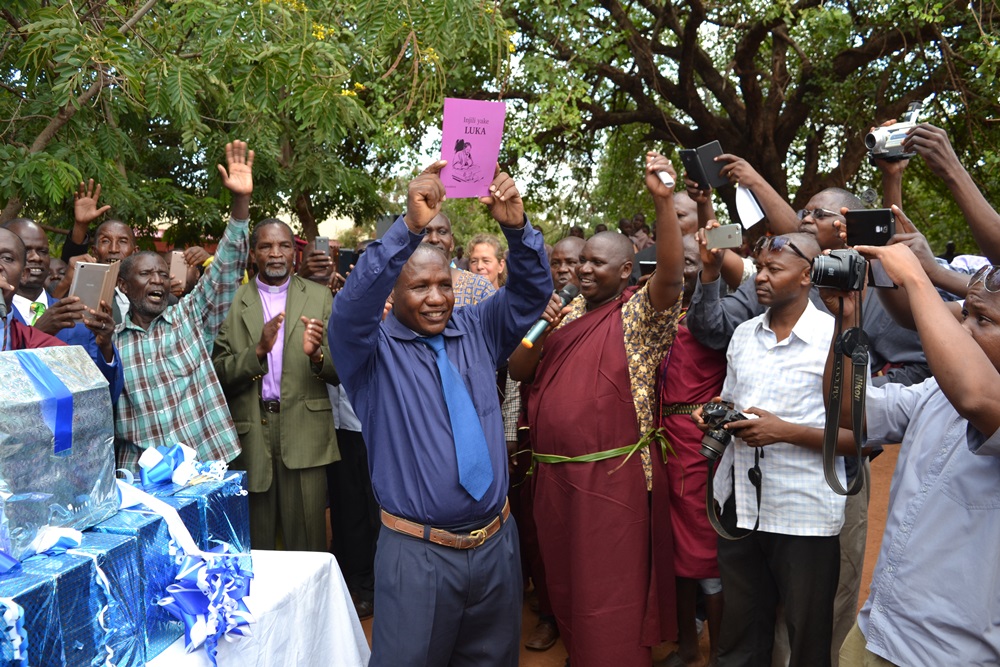
Bible translation work in this project officially began in 2012, with the project office located in Gongoni. Orthography development started the same year and was completed by January 2013. Following this milestone, the team translated health-related shell books and other materials before beginning work on the Gospel of Luke. The Gospel of Luke was completed and dedicated on May 26, 2015, at Chamari Waata village.

In 2017, the Jesus Film was recorded in the Waata language and launched in 2018 at the Anglican Church in Gongoni. On February 13, 2020, additional Scripture portions were launched, including the books of Ruth, Acts of the Apostles, and Philemon, during a celebration held at the Golbanti PEFA Mission Centre in Tana River County.

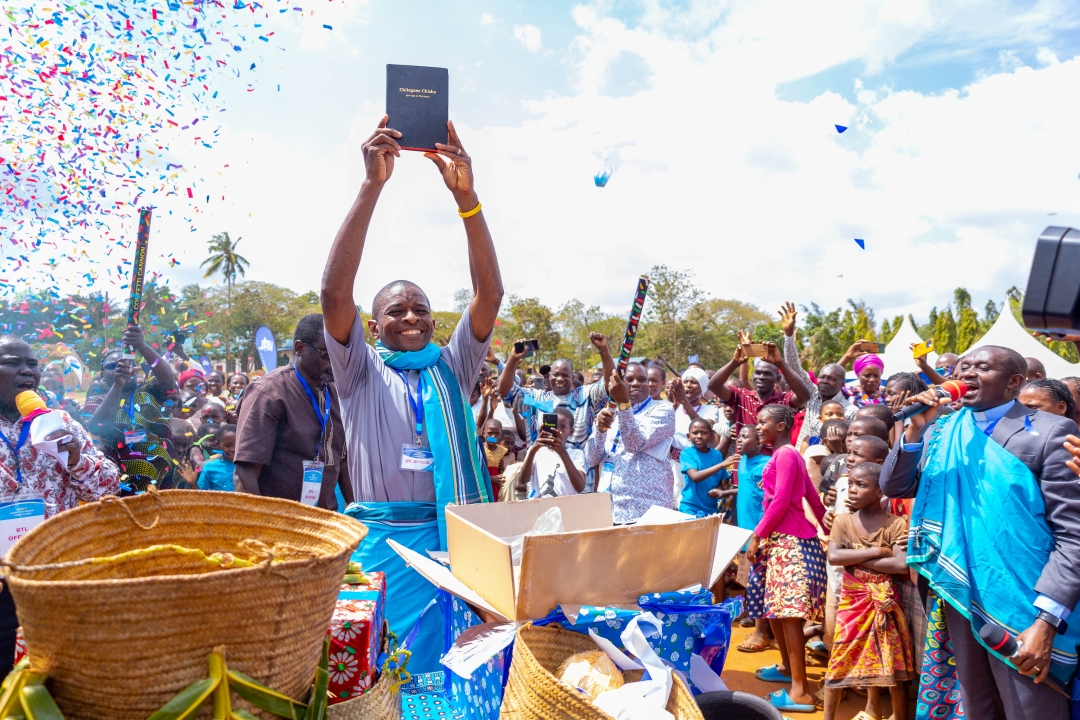
On 5th July 2025, the Waata community received their New Testament in a colourful ceremony. The translation team has embarked on the translation of the Old Testament, and you can support the Old Testament translation by clicking the Donate Button below. 

CONTINUE READING

Taveta-Project.jpg

Taveta Bible translation

The Taveta people are majorly found in Taveta ‘District’ of Taita-Taveta County in the Coastal region of Kenya. They speak a Bantu language known as Kitaveta though they have adapted Kiswahili as their second language. They inhabit the lands between the Tsavo National Park and the Tanzanian border, up to the slopes of Mt. Kilimanjaro. They are also called Wataveta. They are a population of 20,828 according to the 2009 Kenya National Population Census Report.

The Taveta people are mainly involved in subsistence agriculture and they grow bananas, fruits and other horticultural products. Some are involved in cash crop farming and they mainly grow cotton and sugarcane while others are involved in sisal plantation. Some still are into local commercial activities and cross border trade.

Famous landmarks in the area are Mount Kilimanjaro, Usambara Mountains, Crater, Chala, and Lake Jipe which serves as a water hole for wildlife, the Taita wildlife sanctuary, Tsavo West National Reserve, Serengeti National Reserve in Tanzania which is an extension of the Mara National Reserve and Amboseli National Park in neighboring Kajiado District.

Catholic missionaries came to Taveta by late 18oos but they took some acres of land and this made the native move from their land and in return became unresponsive to gospel. The Church missionary society established themselves in Taveta by 1890. The CMS succeeded in their mission work hence majority are Christians though roughly 10% are Muslims. The Anglican Church, the Roman Catholic, and Pentecostal churches are the main denomination in the area. The Taveta people desire to have a Bible translated into their own dialects and together we can help see their dream come true.

CONTINUE READING

Tugen-Project.jpg

Tugen Bible Translation

The Tugen are part of the Kalenjin community and are found in Baringo County. In accordance to the 2009 Kenya Population and Housing Census, the Tugen are about 140,489 people and are further subdivided into Arror, Samors, Lembus and Endorois. The Tugen are cattle keepers and the cow occupies a central part in their culture which is used as food (meat and milk), currency and dowry.

A BTL survey undertaken in 2010 revealed that although the Lembus dialect can comfortably use the Kalenjin Bible, the Samor and Arror dialects cannot use it.

CONTINUE READING

IMG_8318.jpg

Chonyi Bible Translation

The Chonyi community, alternatively known as the conyi/the kichonyi, also falls among the Mijikenda.

A common knowledge with regards to the tribes along the Kenyan coastal strip is the fact that there exists a group of people called the Mijikenda (literally: the nine homesteads). However, the detail of knowing exactly -what comprises this group- is what is usually overlooked. The most commonly mentioned tribes under the Mijikenda being the Giryama and the Digo.

The Chonyi community, alternatively known as the conyi/the kichonyi, also falls among the Mijikenda. Their population sums up to the environs of 184,000 people (Kenya National Population Census Report 2009).They are found in Kilifi and Kaloleni Districts in the Coast Province of Kenya, neighboring the Giryama people. They mostly engage in farming and fishing as economic activities.

A majority of the Chonyi people are Christians, amounting up to 80% of their population, with the rest being animists. Despite this large Christian percentage, the Chonyi community is one among the remaining people groups in Kenya that do not have a Bible in their language. A BTL survey done in 2010 determined the need for a Bible in a community that has a large percentage Christian but lacking Scripture in a language that they can understand.

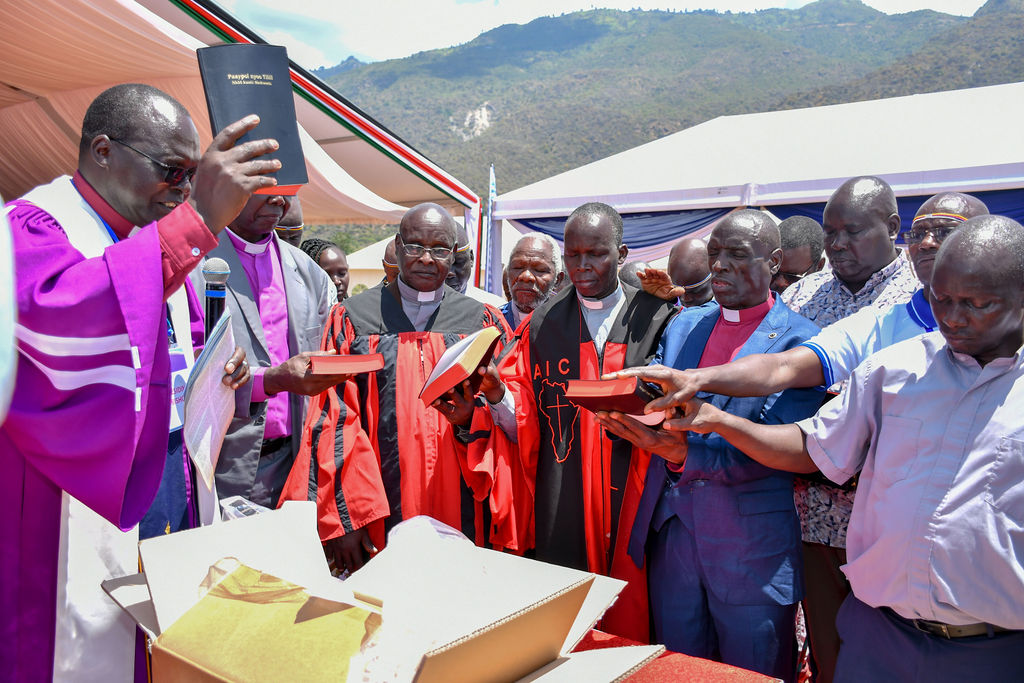
The survey determined a need for Bible translation in the language which can be an adaptation from the Giryama Scriptures. The startup project was begun with a purpose of laying down the foundation necessary for BTL to start up a Translation Project in this community. Vision building meetings with stakeholders in Chonyi were done for the Chonyi Bible and translation work began; so far the Chonyi community have a New Testament in their language dedicated on August, 17th 2024. The translation team has embarked on the translation for the Old Testament.

CONTINUE READING

SLIDER-Daasanach-1.jpg

Daasanach Bible Translation

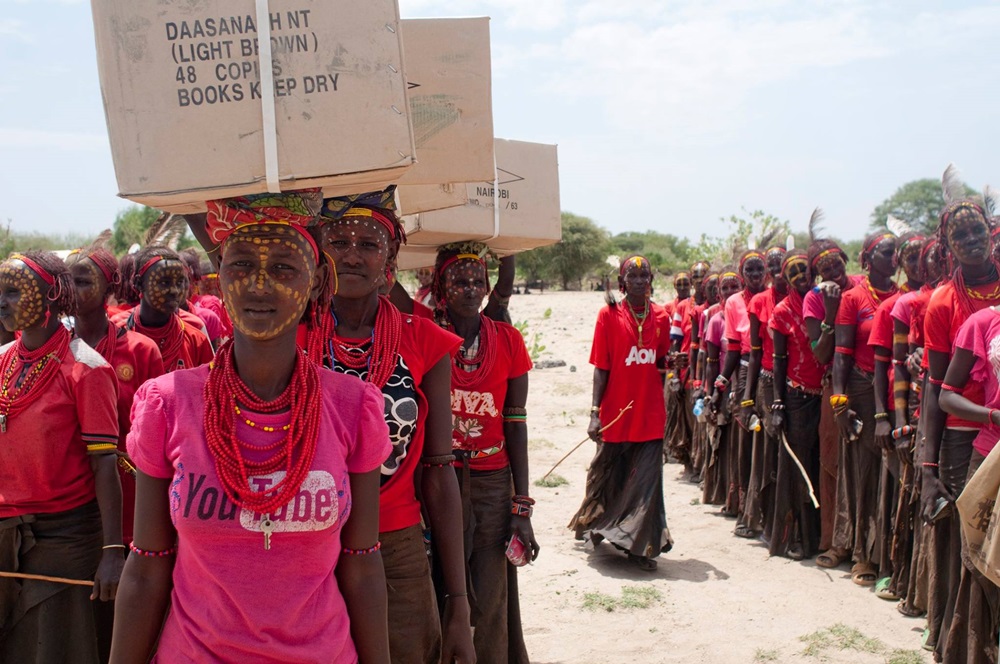
The Daasanach project began in 1983. On 20th September 2014, after 33years the Daasanach New Testament was dedicated in a colour ceremony in Ileret.

The Daasanach are found around the area north of Lake Turkana in Marsabit County. Sometimes they are referred to as Merille. They are Cushites and they number to about 12,530 people, according to the 2009 Kenya Population and Housing Census. They are pastoralists, though a few grow millet along the banks of the Omo River.

Those who grow millet do not have metal implements, but rather use sticks to plant and weed the ground. The Daasanach often eat one meal a day, usually consisting of milk and sorghum, and sometimes meat. Most of the existing population can be found in Ileret Village, a remote outpost on the Eastern shore of Lake Turkana and north of Sibiloi National Park.The Daasanach project began in 1983. On 20th September 2014, after 33years the Daasanach New Testament was dedicated in a colour ceremony in Ileret.

CONTINUE READING

IN_SEARCH_OF_GIRYAMA_BIBLE_2.jpg

Duruma Bible Translation

The Duruma New Testament was completed and launched on 12th August 2000.

Duruma predominantly live on the semi-arid plains, one mountain range inland from the sea coast of eastern Kenya in Kwale County. They are one of the communities that make up the Mijikenda. They are Chiduruma speakers though most of them are bilingual in Swahili. They number to approximately 396, 667 according to the 2009 Kenya Population and Housing Census. The Duruma are very close in language and culture to the Rabai, another of the Mijikenda peoples living west of Mombasa.

The Duruma are mostly a self-sufficient farming group with certain members becoming active traders with the outside world. They are also subsistence farming people growing maize for their own consumption. They also herd cattle and raise tobacco as a cash crop. They live in about 100 villages.

CONTINUE READING

DSC_0429.jpg

Marakwet Bible Translation

TL began the Endo- Marakwet project in 1983, where the language was developed and translation and literacy work began

The Endo – Marakwet numbering 120,000 people are one of the many languages forming the Kalenjin group. Many of the Endo people live on the face of an escarpment above the valley floor. They practice subsistence farming in the area which is fed by three small rivers from the mountains. The water is distributed by an intricate series of irrigation furrows thought to be over 400 years old.

Farming includes a wide variety of crops such as millet, cow peas, corn and various tropical fruits. In addition, families keep sheep, goats and some cattle. Some members of the community also practice beekeeping. Theft and raiding by other tribes in the valley floor keep these herds of cattle small. There is little cash income. Trading, however, provides them with some staples such as tea, sugar, jerry cans, etc.

CONTINUE READING

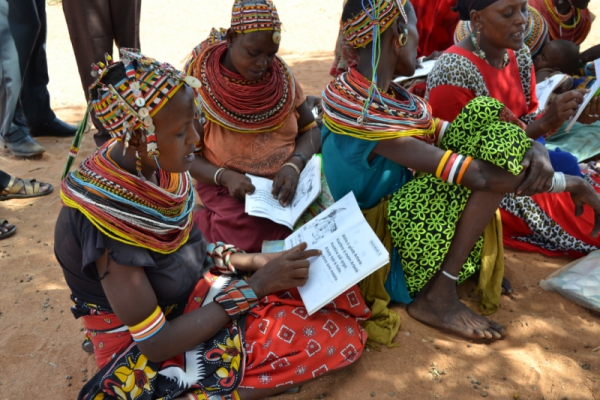
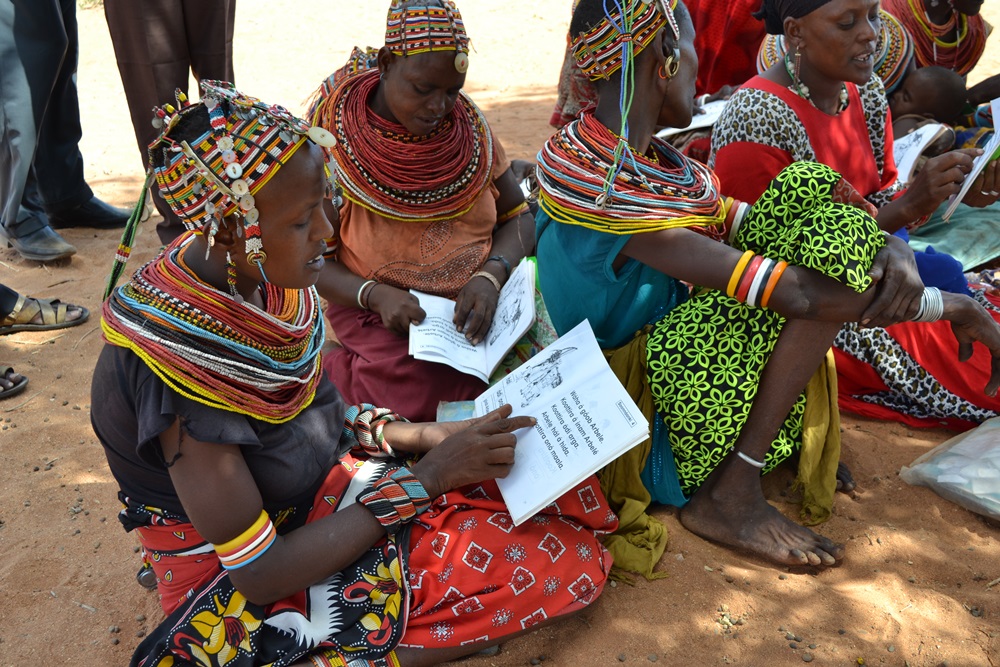
Rendille_women_in_a_literacy_class.jpg

Pokomo Bible Translation

BTL has been working in Lower Pokomo since 1985 and the New Testament was completed in 2005

They are part of the Bantu, East-Coastal people cluster. They are divided into two groups; the Lower Pokomo and the Upper Pokomo. They speak Kipokomo language. They live in the flood plain of the Tana River the largest river in Kenya from its mouth at Kipini to Mbalambala, north of Garissa, in Tana River County. Inhabiting the area since the 17th century, these people have learnt to accommodate themselves to the flooding river, and benefit from the silt and water which these floods provide. They are an agricultural and fishing community, growing crops such as maize, plantains, and sugarcane and rice.

They are approximately 65, 000, with 75% of the population being the Upper pokomo and 25% being lower pokomo. The major difference between the two groups apart from the dialect is religion. The Upper Pokomo are mostly Muslims while the Lower Pokomo are largely Christians. German missionaries began preaching in pokomo by 1887 and by 1914 the lower pokomos had adapted Christianity but the upper pokomo remained as muslims. Methodist missionaries took over from German and they became the dominant denomination. Other denominations include; AIC, Catholic and Pentecostal among others.

CONTINUE READING

Rendille-Literacy.jpg

Rendille Bible Translation

Translation of the Rendille New Testament began in 1981 and was dedicated on the 18th of August 2018.

The Rendille people are traditionally pastoralists keeping goats, sheep, donkeys, and camels. The Rendille people have a traditional religion that worships Waakh, the great God who created all things and is especially the God of the poor. Their religion includes regular prayer times, animal sacrifices, and the existence of ancestral spirits. There is a sizable number of Christians who are about 15%. The Rendille people have had little exposure to Christianity until the latter part of the Twentieth Century. The first churches to begin work among them included the Catholic, AIC, and more recently numerous Pentecostal churches (Kenya Assemblies of God, PEFA, Full Gospel Churches of Kenya, Chrisco, etc.).

While the Rendille people are listed among the least-reached people groups of Kenya, they seem to be responsive to the Gospel. Translation of the Rendille New Testament began in 1981 and was dedicated on the 18th of August 2018. To God be the glory.

CONTINUE READING

Older Posts

Search BTL

About BTL

BTL LETTERHEAD @ 40

Bible Translation & Literacy is a Christian organization that was established in 1981 to facilitate Bible translation and sustainable Literacy and language development programmes among small language groups in Kenya and beyond.

Get Involved

  • -Pray with us
  • -Support Bible translation
  • -Volunteer your services
  • -Become an associate member
  • -Become a corporate member

About Us

BTL logo blue with tagline transparent (1)

Bible Translation & Literacy is a Christian organization that was established in 1981 to facilitate Bible translation.

Quick Links

  • Contact Us
  • Get Involved
  • CICC
  • RFTB
  • About Us
  • My Cart
  • Blog

Our Office

Gate 7, Masaba Road, Lower Hill Nairobi, Kenya
+254 722 209 606
info@btlkenya.org
8AM - 4.30PM

Recent Posts

  • The Marakwet 'Beehive' is Complete

    July 29, 2026

  • One Run, Three Counties - Nairobi, Nakuru, Eldoret

    April 6, 2026

  • Initiating The Kipsigis Translation Project

    March 16, 2026

© Copyright BTL. All Rights Reserved.

  • Contact Us
  • Get Involved
  • CICC
  • RFTB
  • About Us
  • My Cart
  • Blog

We are here to help